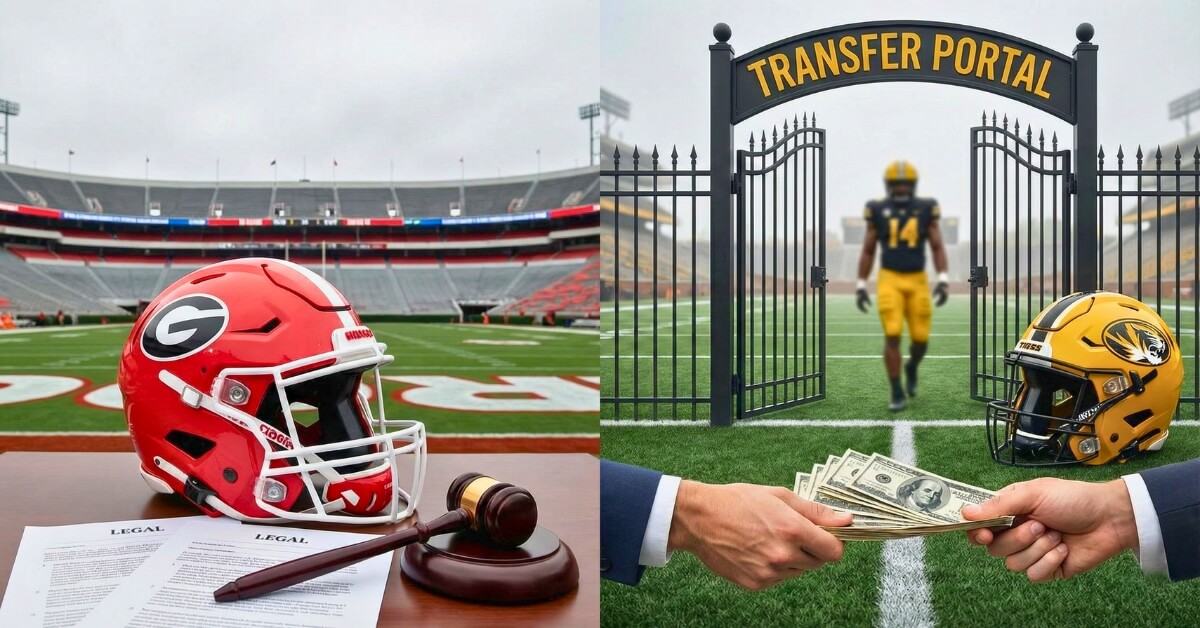
The University of Georgia filed one of the most aggressive lawsuits of the NIL period, suing former linebacker Damon Wilson, II for damages of $390,000. This case has caused a stir in college football and raised questions about player contracts, athlete movement and the extent to which schools can enforce Name, Likeness and Image agreements.
Georgia has filed a complaint alleging that Wilson violated the terms of a NIL license contract signed by him and did not fulfill his obligations in relation to roster retention and promotional deliverables. The Bulldogs claim that after entering the Missouri transfer portal, they should be repaid the value of their deal. This could set precedents for future NIL disputes in the NCAA.
College Football: A First-of its-Kind Battle
This situation is explosive because of the timing. Wilson, a once highly recruited five star prospect, only played one season at Athens, before transferring. Georgia claims he received NIL compensation for not fulfilling the required period, but Wilson’s representatives insist that the lawsuit is misleading and the school is trying to punish Wilson for exercising his right to transfer.
The lawsuit’s supporters argue that NIL agreements are contracts of business and must be respected. The critics counter that college athletes, who are still technically amateurs, shouldn’t be subjected to punitive financial penalties.
Why this case has captured national attention
This story is not just about a player or a school. This story is trending because of the growing tensions in college sports.
- The conflict between NIL money (the old currency) and the era of free transfers
- School enforces contracts against players who protect mobility
- Uncharted territory in the law that could shape future NIL deals
- Fears that athletes could face lawsuits for simply transferring
- SEC rivalry adds drama to the conflict
Many boosters and players collectives are closely watching the situation as transfer activity is at a record high. NIL agreements have become more structured and enforced.
Could it Change College Football
If Georgia wins, schools could feel empowered to take legal action against players that leave the team before fulfilling their contractual obligations. If Wilson wins the case, NIL contracts could become less enforceable, prompting colleges to rewrite their agreements or reduce up-front payments.
This case is a turning point in either direction. This lawsuit could determine where the balance of power is between athletes and institutions.
As both sides plan their legal strategies, the rest of college football will be watching closely.