Pickleball is no longer a backyard pastime. Cities across the U.S. are converting abandoned department stores and big-box retail spaces into indoor pickleball courts. One of the most recent examples – the proposed indoor pickleball conversion of the former JCPenney Building in downtown Kingsport – shows exactly why it is increasing.
Understanding this movement is important, whether you are a sports enthusiast or a city leader who wants to revitalize public space. This article explains the rise of indoor pickleball and the economic potential behind repurposing empty retail properties. It also explains how Kingsport’s project fits in the larger national picture.
Why Indoor Pickleball Facilities are Booming in the United States
In the past few years, the number of pickleball players in the U.S. grew at an unprecedented rate. Cities are facing a growing challenge as demand for pickleball courts grows.
Indoor facilities solve several problems:
1. Weather-Proof Play
Indoor venues are ideal for players who want access all year round. Indoor venues are ideal for leagues, tournaments and structured programs because they eliminate issues such as rain, heat or humidity.
2. Massive Player Demand
Municipalities have reported waiting lists, overcrowded courts and public frustration. Indoor venues can relieve the pressure by:
- All the courts you need in one place
- Extra hours
- Court Reservation Systems
- Youth programs and training
3. Profitable Business Model
The cost of converting retail space is lower than that of a new building. Think:
- Lower real estate prices
- High ceilings
- Wide, open floor plans
- Ample parking
The redevelopment of courts is much quicker and easier with these products.
4. Community Revitalization
Indoor pickleball courts attract foot traffic, which is crucial to downtown areas that have been struggling with retail decline for years. Players, tournaments and weekend events benefit restaurants, cafes and shops.
Kingsport’s latest project is a perfect fit.
Case study: Kingsport’s old JCPenney becomes an indoor pickleball hub
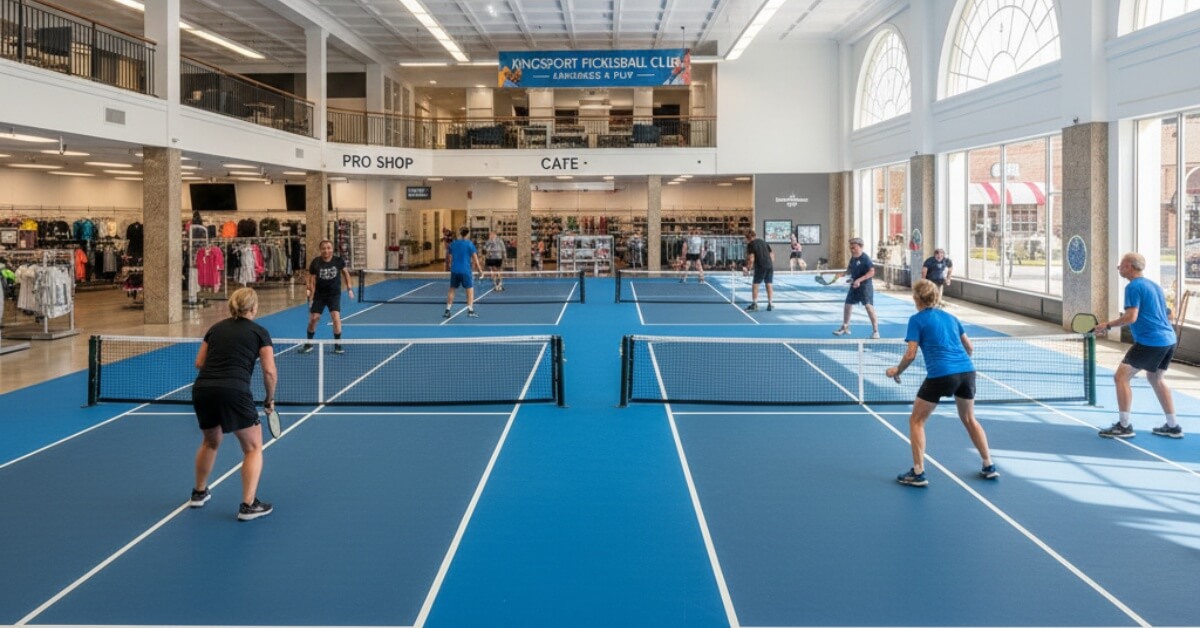
The former JCPenney store in downtown Kingsport will be transformed into a 6-court indoor pickleball facility. This will breathe new life into an old structure that has been vacant for a while and strengthen the recreation landscape of the city.
Why This Project is Important
The building was unused for many years. Now it is being transformed into a space for:
- Everyday Open Play
- Pickleball leagues
- Youth Training Programs
- Recreational options for seniors
- Weekend matches and social events
The project could not have come at a better time for a city that has a growing and passionate pickleball community.
How to Make the Most of an Empty Retail Space
Pickleball is perfect for old department stores because they have:
- Large Square Footage
- Ball trajectory is best when ceilings are high.
- Reinforced Flooring
- Construction loading access
- Indoor climate control systems
JCPenney Kingsport is a great place to shop.
Increase Downtown Foot Traffic
Pickleball is a great alternative to leaving a building vacant, which could harm nearby businesses.
- Daily Visitors
- Tournament weekends
- Restaurant traffic increases
- Local retailers gain new customers
This type of conversion is often an anchor attraction that encourages additional investment in adjacent blocks.
Why Pickleball is Taking Over Former Retail Spaces Across America
The project in Kingsport is a reflection of a national pattern. Pickleball is being used by city planners and property owners to redevelop abandoned Sears storefronts, as well as closed Kmart stores.
Why the trend is so strong:
1. Retail Decline = Opportunity
Cities and landlords are burdened with a huge financial burden when vacant malls or department stores remain empty. Pickleball turns these liabilities into active revenue centres.
2. The fastest-growing sport in the U.S.
Communities can no longer rely on parks to keep up with the millions of new players. Indoor venues provide structured and scalable solutions.
3. Multi-Use Flexibility
Indoor spaces can be expanded into:
- Fitness rooms
- Sports shops
- Cafés
- Event Spaces
- The tournaments are a great way to get together with friends and family.
The projects are more sustainable when they have a diverse revenue stream.
4. Social & Intergenerational Appeal
Pickleball doesn’t just build communities, it is a sport. All ages are involved, including seniors, families, young athletes, and former tennis players.
This ensures that indoor venues are profitable.
5. The Perfect Fit for Old Retail Layouts
The majority of retail shells will fit.
- 8-20 courts depending on layout
- Bleacher Sections
- Viewing lounges
- Pro shops
- Locker rooms
The interior can be converted relatively quickly and without major structural modifications.
Why indoor pickleball venues are good for cities
Kingsport’s redevelopment is not just about a new sports arena — it also boosts the local economy.
1. Revitalizing Downtown Assets
By converting older commercial properties, cities can avoid blight and increase foot traffic in central districts.
2. Create New Business Opportunities & Jobs
Indoor pickleball courts create positions for:
- Coaches
- Tournament organizers
- Administrative staff
- Maintenance crews
Businesses nearby also benefit.
3. Boosting tourism with tournaments
Pickleball tournaments attract players from across the country. During event weekends, hotels, restaurants, and retail shops experience significant increases in business.
4. Building Community Engagement
Indoor courts encourage healthy living, social interaction, and accessible recreation to all ages.
5. Attracting Real Estate Investors
These conversions have sparked an interest in:
- Commercial Investors
- Mixed-use developers
- Sport-focused entrepreneurs
Kingsport’s new project will allow the city to reap the benefits of these long-term trends.
What makes a successful indoor pickleball conversion?
Here are some key factors based on the success of projects in other cities (and Kingsport as an example),
1. Locations with existing foot traffic
The economic impact of shopping areas or downtown is amplified.
2. Accessible parking
This advantage is usually present in older retail buildings.
3. Multiple courts (6+ minimum).
More courts = increased membership, leagues and tournaments.
4. The Right Flooring & Lighting
Players expect:
- Non-slip sport surfaces
- Professional Lighting
- Ample spacing
5. Community Partnerships
The use of the facility and its visibility are increased by working with local leagues and city officials.
Kingsport’s new indoor pickleball facility: What players can expect
The redevelopment will be a signal even though the final details may change during construction.
6 Dedicated Indoor Courts
You can count on a consistent and weather-proof service.
Interior Layout Renovated
New flooring, lighting and player amenities.
Downtown Accessibility
Ideal for local residents and seniors.
Potential Events & Leagues
Perfect for:
- Youth Programs
- Mixed Leagues
- Weekend Tournaments
- Holiday Events
A Modern, Social Environment
Indoor pickleball doesn’t just revolve around competition. It’s also about friendships and active living.
Conclusion
Kingsport’s conversion of the old JCPenney into an indoor pickleball facility is more than just a local story. It’s also a great example of a nationwide movement. Pickleball is a growing sport, and cities are converting empty retail spaces into active recreational centers.
This trend is a multi-problem solution.
- Filling vacant commercial spaces
- All-year-round access to sports
- Bring life back to downtown areas
- Create economic opportunity
- Players’ demand for more games is exploding
Kingsport has proven what many cities have discovered: indoor pickleball, not only a fad, is the future for community recreation and commercial development.
FAQ’s
1. Why is it that old retail spaces are being converted into indoor pickleball courts
They are ideal for pickleball because they have large, open spaces with high ceilings and low redevelopment costs.
2. Why has indoor pickleball grown so much?
Players expect year-round accessibility, constant conditions, and facilities that can meet demand.
3. What are the benefits of Kingsport’s new indoor pickleball court?
The project will revitalize a vacant building and boost downtown traffic. It will also provide a modern recreation hub for the local community.
4. Indoor pickleball courts are they profitable?
Memberships, leagues and rentals as well as tournaments and other amenities are all revenue-generating.
5. Will cities convert more old department stores or malls into pickleball courts in the future?
Absolutely. Kingsport’s Project reflects a national trend which continues to accelerate.